<< Back to Liver Stiffness and Elastography
The Sinusoidal Pressure Hypothesis
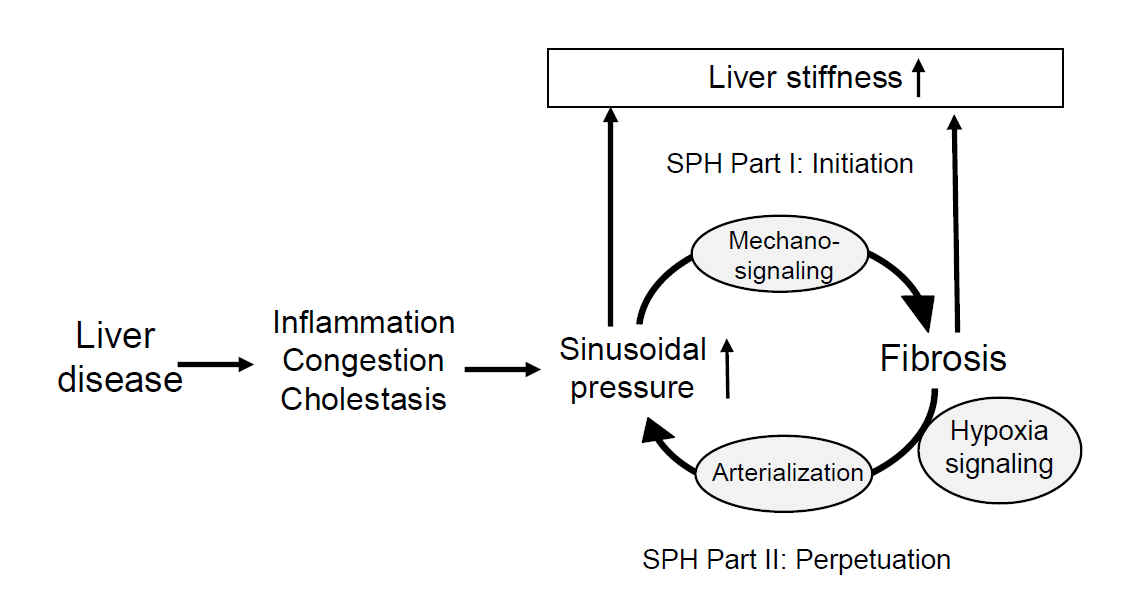
The sinusoidal pressure hypothesis proposes that elevated sinusoidal pressure is not merely a consequence of cirrhosis but may act upstream as a driver of fibrogenesis.
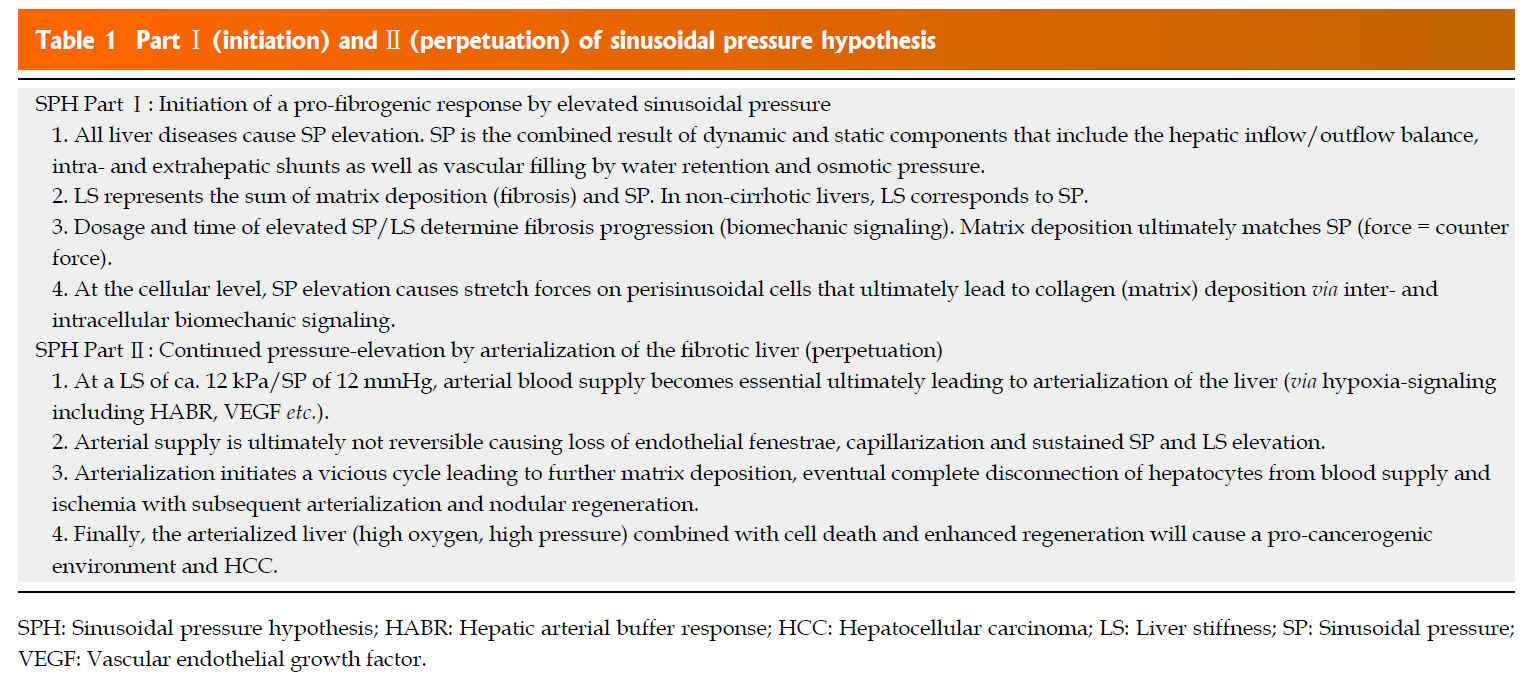
The hypothesis emerged from studies showing that liver stiffness changes immediately with venous, biliary and arterial pressure. It extends these observations into a mechanistic model in which persistent pressure generates biomechanical stretch within the perisinusoidal compartment, activates matrix-producing pathways and promotes fibrosis.
The model separates two phases: initiation, in which elevated sinusoidal pressure triggers mechano-signalling, and perpetuation, in which vascular remodeling and arterialization sustain the pressure load. It provides a unifying physical framework for otherwise diverse causes of chronic liver injury.
Selected publications
- Does pressure cause liver cirrhosis? The sinusoidal pressure hypothesis. Mueller S. World J Gastroenterol. 2016;22(48):10482–10501.
- Liver stiffness is directly influenced by central venous pressure. Millonig G et al. J Hepatol. 2010;52(2):206–210.
- Arterial pressure suffices to increase liver stiffness. Piecha F et al. Am J Physiol Gastrointest Liver Physiol. 2016;311(5):G945–G953.