<< Back to Liver Stiffness and Elastography
Liver Stiffness and Elastography – Detailed Research
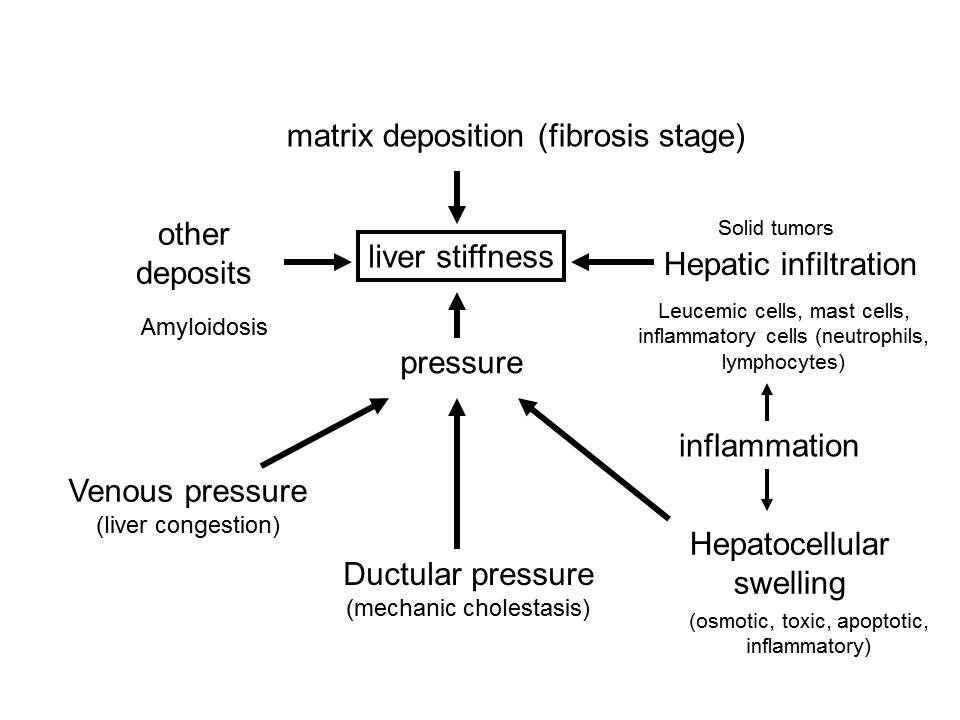
Liver stiffness is not a pure fibrosis marker. Our work helped establish it as a dynamic physical parameter determined by both tissue matrix and pressure-related factors.
Transient elastography transformed non-invasive fibrosis assessment, but early clinical use often treated stiffness as a direct surrogate for collagen. We showed that this interpretation is incomplete. Cholestasis, venous congestion, arterial pressure and inflammatory activity can raise liver stiffness rapidly and reversibly, whereas fibrosis produces a more persistent matrix-dependent component.
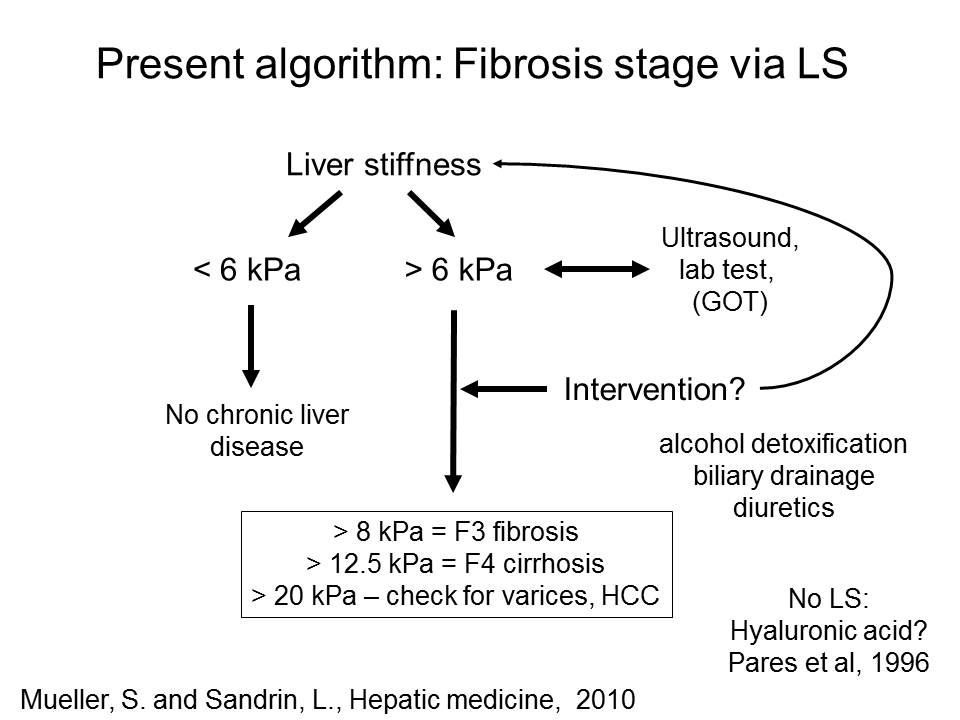
This distinction led to practical strategies for interpreting elastography in context: identify reversible confounders, combine stiffness with laboratory and imaging findings, and repeat measurements after inflammation or congestion has resolved. The same observations also contributed to the pressure-stiffness-fibrosis concept and later to the sinusoidal pressure hypothesis.
Selected publications
- Liver stiffness: a novel parameter for the diagnosis of liver disease. Mueller S, Sandrin L. Hepat Med. 2010;2:49–67.
- Extrahepatic cholestasis increases liver stiffness (FibroScan) irrespective of fibrosis. Millonig G et al. Hepatology. 2008;48(5):1718–1723.
- Liver stiffness is directly influenced by central venous pressure. Millonig G et al. J Hepatol. 2010;52(2):206–210.
- Increased liver stiffness in alcoholic liver disease: differentiating fibrosis from steatohepatitis. Mueller S et al. World J Gastroenterol. 2010;16(8):966–972.